Fabric Data Factory’s Airflow move matters more than the headline suggests
The Challenge
Most organisations do not have a data orchestration problem. They have a hand-off problem.
One team is building pipelines in Azure Data Factory. Another is writing Python orchestration with Apache Airflow. A third is trying to feed Fabric, Power BI, lakehouse workloads, and now AI initiatives from the same estate. The result is familiar: duplicated logic, awkward operational boundaries, and far too much time spent translating between tools rather than delivering insight.
That matters because AI adoption is now colliding with data platform reality. If your orchestration layer is fragmented, your AI roadmap will be fragmented too. You cannot build reliable copilots, agents, or analytics products on top of brittle movement patterns and disconnected operations.
This is why Microsoft’s latest Fabric Data Factory update is more important than it first appears. On the surface, it is a product feature story about Apache Airflow jobs and pipeline improvements. In practice, it is another step in Microsoft’s attempt to make Fabric the operational centre of gravity for data movement, transformation, and AI-ready delivery.
And that is the real question for IT leaders: not “is Airflow now in Fabric?” but “does this reduce architectural friction enough to simplify how we run the estate?”
What's Changed
Microsoft has added managed Apache Airflow jobs to Fabric Data Factory alongside continued investment in Fabric pipelines and related Data Factory capabilities. The official positioning is clear: data engineers and architects can orchestrate Python-based DAG workflows without having to stand up and manage the underlying Airflow infrastructure themselves. Microsoft’s Fabric documentation describes Apache Airflow jobs in Fabric as a managed service for building and running Python DAGs without worrying about the setup behind the scenes.
That matters because Airflow is already embedded in plenty of modern data estates. It is widely understood, flexible, code-first, and well suited to teams that want orchestration expressed in software rather than purely in low-code interfaces. But in many enterprises, it sits beside rather than inside the broader Microsoft analytics stack.
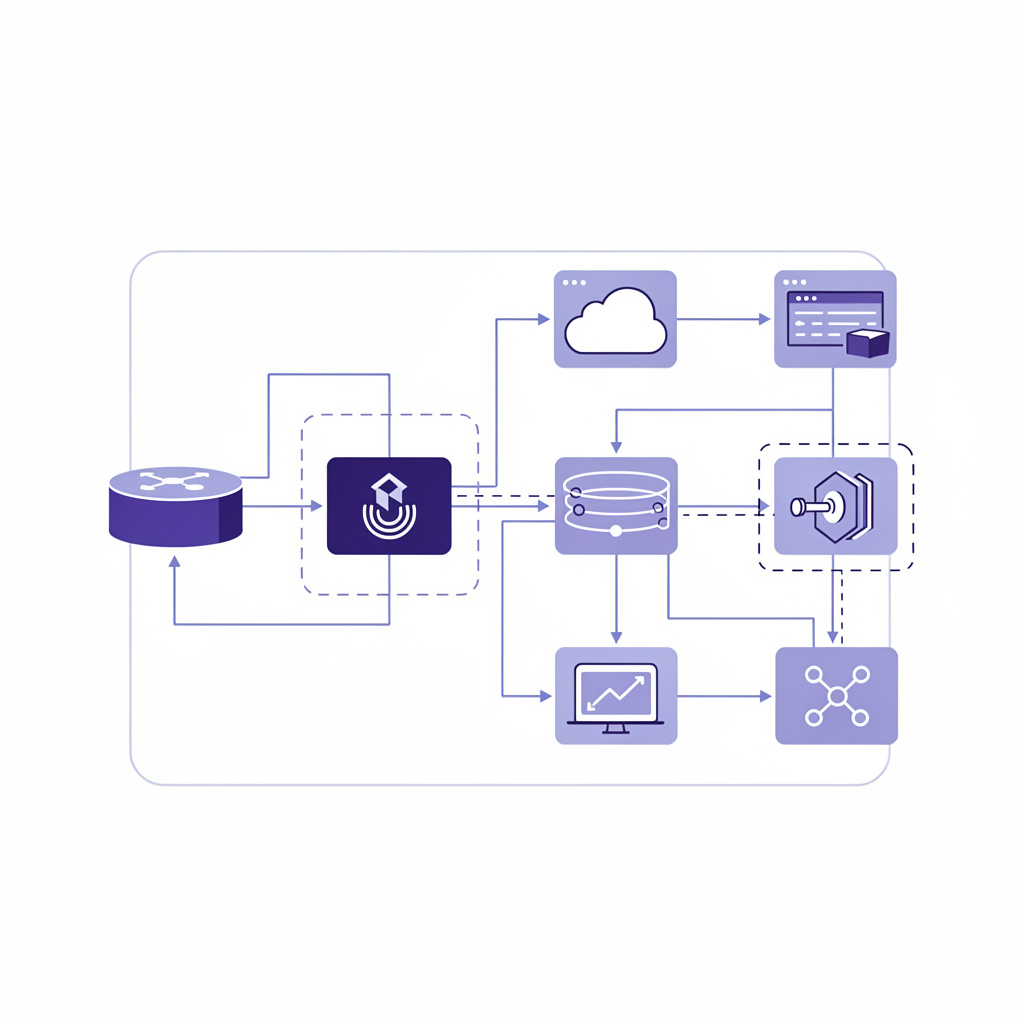
Fabric Data Factory is Microsoft’s attempt to collapse that split. The platform already covers cloud-scale data movement and transformation, and Microsoft is increasingly framing it as the integration foundation inside Fabric. The new Airflow support extends that message: whether teams prefer pipelines, Power Query driven dataflows, or Python DAG orchestration, Microsoft wants those patterns operating in one governed environment.
There is a practical migration angle too. Microsoft has already published guidance on moving Azure Data Factory workloads towards Fabric Data Factory, and this update strengthens that story. For organisations carrying a mix of ADF pipelines, newer Fabric workloads, and code-centric engineering teams, Airflow support gives Microsoft a stronger answer to the question, “why consolidate here rather than keep bolting services together?”
The non-obvious point is this: Airflow is not the story. Standardisation is.
If Fabric can host more of the orchestration patterns teams already use, Microsoft improves its chances of becoming the default operating surface for data delivery. That is strategically useful for customers if it removes tool sprawl, improves visibility, and shortens the path from raw data to something AI systems can actually consume.
But there is a caveat. Consolidation only helps if it simplifies operations in the real world. If teams end up with the same fragmentation under a different logo, nothing meaningful has improved.
Getting Started
If you are evaluating this seriously, start with the operating model rather than the feature list.
First, identify where orchestration lives today. In most organisations, it will be spread across low-code pipelines, scripts, schedulers, notebooks, and perhaps an existing Airflow footprint. Before adopting Fabric’s new Airflow capability, map the current patterns by team, workload criticality, and ownership. You need to know whether you are solving a genuine estate problem or just adding another orchestration option.
Second, decide what belongs in Fabric and what should stay where it is. Not every workload should move simply because it can. Regulated processes, heavily customised Airflow implementations, or mission-critical pipelines with mature operational controls may need a slower path. The win comes from reducing unnecessary complexity, not forcing uniformity where it creates risk.
Third, use Microsoft’s documentation to validate fit. The key starting points are: - Fabric Data Factory documentation: https://learn.microsoft.com/en-us/fabric/data-factory/ - Apache Airflow jobs in Fabric concepts: https://learn.microsoft.com/en-us/fabric/data-factory/apache-airflow-jobs-concepts - Fabric vs Azure Data Factory comparison: https://learn.microsoft.com/en-us/fabric/data-factory/compare-fabric-data-factory-and-azure-data-factory - Migration planning for Azure Data Factory to Fabric Data Factory: https://learn.microsoft.com/en-us/fabric/data-factory/migrate-planning-azure-data-factory
Fourth, test with one workflow that actually matters. Not a toy demo. Pick a pipeline with real dependencies, governance requirements, and downstream consumers. Measure three things: - how quickly the team can onboard - how much operational visibility improves - whether hand-offs between data engineering, analytics, and platform teams get simpler
A minimal starting point is to run a managed Airflow DAG in Fabric for a bounded integration scenario while tracking ownership, lineage, monitoring, and incident handling from day one. If the workflow is easier to support and easier to explain, you are onto something. If not, you have learned that before a wider migration.
What This Means
My take is that this update is useful because it targets a problem most organisations are already feeling: too many delivery patterns across the same data estate.
AI adoption does not stall because executives lack ambition. It stalls because the underlying data platform is messy, ownership is blurred, and operational discipline is inconsistent. Anything that helps standardise orchestration, reduce context switching, and place governance closer to execution is worth paying attention to.
That said, enterprises should resist the temptation to treat platform convergence as an automatic win. The success test is not whether Fabric can now run Airflow jobs. It is whether your teams can use that capability to build cleaner delivery paths from source data to trusted analytics and AI outcomes.
In my experience, foundations beat novelty every time. If this update helps organisations bring pipelines, code-first orchestration, and governance into one usable operating model, it is significant. If it just adds another checkbox to the platform slide, it is noise.
That is the lens I would use.
Leon Godwin, Principal Cloud Evangelist at Cloud Direct