
Purview Data Security Investigations shifts response from search to decision
The Challenge
Most data security incidents do not fail because we lack alerts. They fail because we cannot turn the signal into a decision fast enough.
That is the uncomfortable truth in a lot of organisations. We have DLP policies. We have insider risk indicators. We have endpoint telemetry. We have audit logs. And when something serious happens, we still end up with security, compliance, and data teams manually stitching together a story from too many screens.
The problem gets worse as AI adoption grows. Sensitive data is copied into more workflows, more people can access more information through intelligent assistants, and the cost of being slow during an investigation rises sharply. If an organisation cannot quickly determine what data is involved, where it moved, and what action to take next, then all the upstream controls in the world do not help enough when something slips through.
That is why Microsoft Purview Data Security Investigations is worth paying attention to. The headline is not that Purview has another investigation view. The real value is that Microsoft is trying to shorten the gap between detection and action.
In security operations, that gap is where pressure lives. It is where the board starts asking questions. It is where legal and compliance want certainty. And it is where analysts lose time hunting for the few files, users, or activities that actually matter.
What's Changed
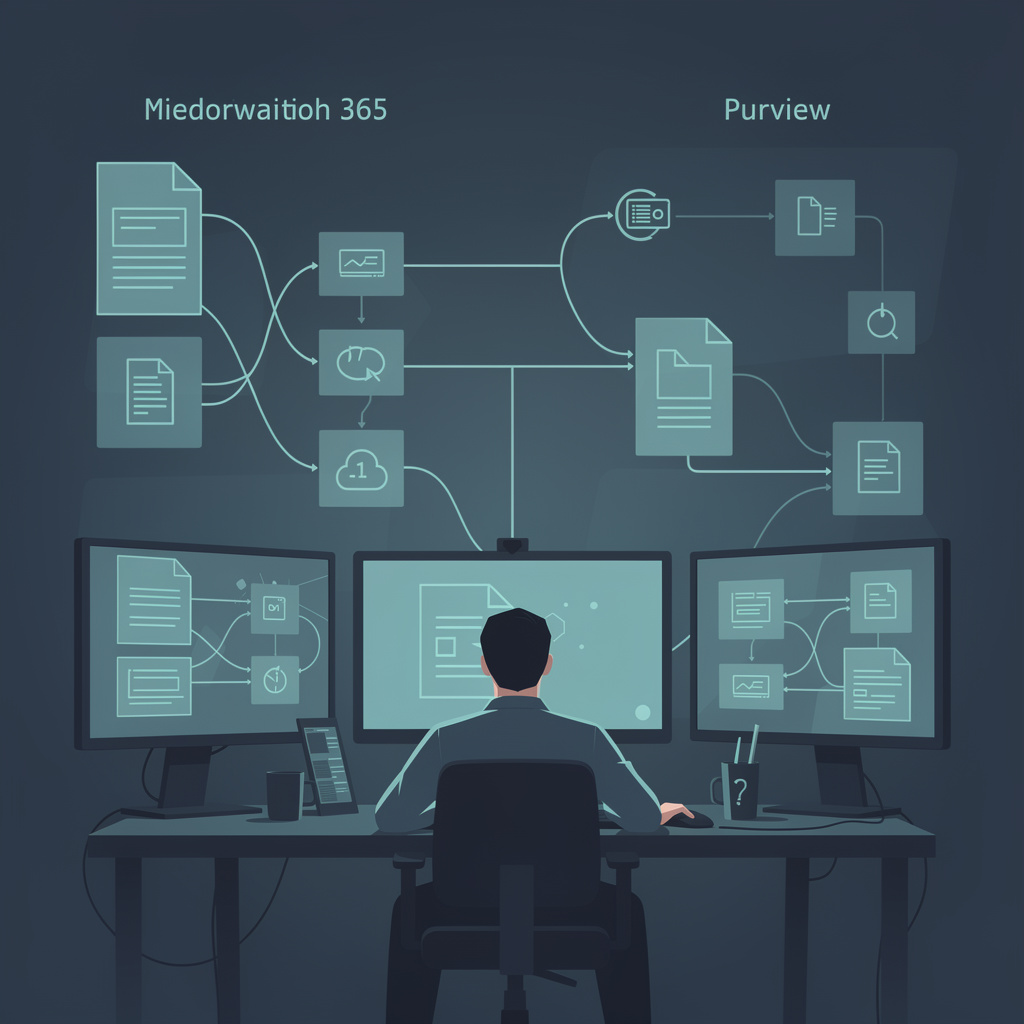
Microsoft Purview Data Security Investigations brings investigation workflows closer to the data itself, helping teams analyse files tied to incidents such as oversharing, insider-driven exfiltration, or suspicious movement of sensitive information. The supporting Microsoft material also points to mitigation actions, including the ability to purge sensitive or overshared content directly within the investigation workflow.
That might sound incremental. I do not think it is.
A lot of security tooling is still excellent at raising alarms and weaker at helping people make confident decisions under time pressure. What Purview appears to be doing here is moving the experience from “here is a possible issue” to “here is the evidence path and the action surface”. That is a better place to be.
For Microsoft-centric organisations, this matters because Purview already sits close to the collaboration and productivity stack where a lot of modern data risk now lives. Sensitive files are not only sitting in old records systems. They move through Teams, SharePoint, endpoints, exports, copied folders, and AI-assisted workflows. Investigations have to follow that reality.
There is also a governance angle. Security leaders are being asked to support AI adoption without becoming the department of “no”. That only works if they can show they have credible controls for when things go wrong. Better investigation workflows do not replace prevention, but they make the operating model more believable.
And that is important. Many organisations are still trying to adopt AI with governance models built for a slower, more static world. They assume review windows will be long, data movement will be obvious, and remediation can be handled in separate tools by separate teams. In practice, modern incidents cut across those boundaries very quickly.
Purview’s direction here suggests a more integrated response pattern: understand the incident, inspect the affected content, and act without losing context. That is the right shape for the problem.
We should still be careful not to overstate it. Better investigations do not remove the need for strong labelling, sensible access controls, least privilege, or clear policies around how employees and agents can handle sensitive data. If those basics are weak, investigations become a clean-up tool for avoidable mess.
Getting Started
If your organisation is already using Microsoft 365, Purview, or Copilot-related controls, this capability deserves a practical review. Not as a feature tour, but as part of an incident response drill.
I would start by mapping the investigations process you have today. When a sensitive file is overshared or suspected to be exfiltrated, who gets involved? How long does it take to identify the relevant files? How many consoles do analysts have to move between? And who has authority to take remediation action?
Then test whether Purview Data Security Investigations actually shortens that path.
A sensible evaluation plan would be:
- Pick one realistic investigation scenario, such as overshared confidential documents or suspected insider theft
- Trace how your current team handles it from alert to evidence to action
- Review the latest Purview guidance and GA announcement details
- Compare whether the Purview workflow reduces handoffs, investigation time, or uncertainty
- Validate the governance around mitigation actions so they are fast but controlled
I would also involve compliance and data owners, not only security operations. The hard part in these incidents is often not finding the event. It is agreeing what should happen next.
Useful starting points:
- Purview what's new: https://learn.microsoft.com/en-us/purview/whats-new
- Purview overview: https://www.microsoft.com/en-us/security/business/microsoft-purview
- GA announcement for Data Security Investigations: https://techcommunity.microsoft.com/blog/microsoft-security-blog/microsoft-purview-data-security-investigations-is-now-generally-available/4489363
If you are actively adopting AI agents or Microsoft 365 Copilot, I would treat this as part of readiness work. The more valuable and reachable your information becomes, the more your investigation capability matters.
What This Means
The organisations that will adopt AI well are not the ones with the loudest innovation messaging. They are the ones that can investigate and contain data risk without paralysis.
That is why I think this matters. Purview Data Security Investigations is not glamorous, but it addresses one of the most practical blockers to responsible AI adoption: confidence that when something suspicious happens, the organisation can respond quickly and with enough context to act.
In my experience, this is where many AI strategies become real or fall apart. If security and governance teams cannot see the path from alert to action, every new AI use case starts to feel like unmanaged risk. If they can, the conversation changes. It becomes possible to say yes with guardrails instead of no by default.
So the value here is bigger than incident handling. It is operational trust. And for most organisations, operational trust is what unlocks the next stage of AI adoption.
Leon Godwin, Principal Cloud Evangelist at Cloud Direct