The new Fabric JDBC driver matters because enterprise AI still depends on boring connectivity
The Challenge
A lot of AI conversations still skip the part where enterprise systems have to connect cleanly to the data platform underneath.
That is a mistake.
If developers, BI tools, or Java applications cannot reach governed Fabric data services in a secure and predictable way, the rest of the architecture starts to wobble. You can have the model, the use case, and the budget. But if connectivity is clumsy, brittle or inconsistent, delivery slows down fast.
That is why the general availability of the Microsoft JDBC Driver for Microsoft Fabric Data Engineering is more important than it might first appear.
At a glance, it looks like a standard connectivity announcement. In reality, it is part of a bigger enterprise story: making Fabric easier to plug into the real application estate, not just the Microsoft demo path.
And that matters because most organisations do not adopt AI in a greenfield world. They adopt it in a world full of existing Java apps, BI tools, integration layers and security controls.
What’s Changed
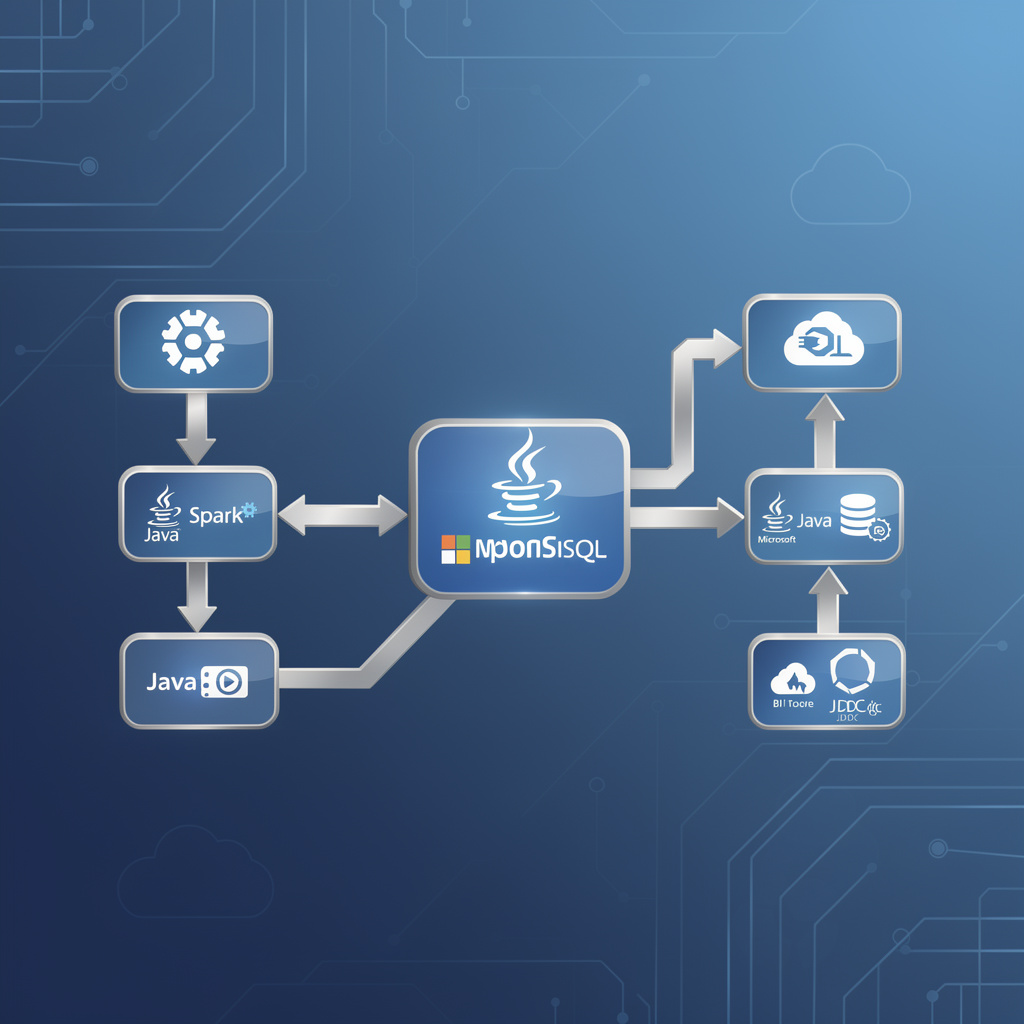
Microsoft has now made its JDBC driver for Microsoft Fabric Data Engineering generally available. The driver enables Java applications and tools to connect to Spark SQL workloads running in Fabric, using Fabric’s Livy APIs as the execution layer.
The practical value is broader than “Java can talk to Fabric”. JDBC is still a standard interface that sits behind a lot of enterprise tooling. When Microsoft ships a supported, enterprise-grade driver with Azure Entra ID authentication support and compatibility across modern Java versions, it lowers adoption friction for organisations that want Fabric to become part of a wider data and AI estate.
That matters because unsupported or awkward connectivity is where otherwise good platforms lose momentum. Teams start building workarounds. Security teams ask awkward questions. Architects add another data copy because the direct path feels unreliable. Before long, complexity increases for reasons that have nothing to do with business value.
A supported Fabric JDBC path helps counter that. It gives platform teams a cleaner route for integrating reporting tools, Java services, notebooks, orchestration logic and partner applications against Spark SQL workloads in Fabric.
I also think this announcement says something useful about Microsoft’s direction. Fabric is becoming more than a place to land data and run isolated workloads. It is being shaped into a platform that other enterprise components can connect to more naturally.
That is a big deal for AI adoption.
When organisations talk about grounding copilots and agents in governed business data, they often focus on retrieval and model orchestration. But the real blocker is often more mundane: can the surrounding systems connect, authenticate, query and scale without custom glue everywhere?
This driver does not solve that whole challenge. But it strengthens one of the underlying interfaces that serious enterprise delivery depends on.
Getting Started
If you have Java-heavy estates, analytics tooling that relies on JDBC, or internal applications that need access to Fabric Spark SQL workloads, this is worth evaluating now that it is generally available.
Start with the official Microsoft Learn documentation and validate the prerequisites. Microsoft calls out JDK version requirements, Fabric workspace access, and Azure Entra ID authentication requirements. Those are not box-ticking details. They are the first indicators of how smooth adoption will be in your environment.
Then test the driver in one real integration path, not just a hello-world connection.
For example, connect a Java-based service or a familiar BI client to a Fabric Spark SQL workload and assess:
- authentication behaviour under your existing identity controls
- query performance for realistic workloads
- compatibility with your preferred client libraries and tooling
- operational visibility when things fail
That last point is important. Enterprise connectivity is not just about whether a query runs. It is about whether support teams can understand what happened when it does not.
I would also look at this through an architecture lens. If your organisation is building data products or AI-enabled internal services on Fabric, ask whether JDBC becomes the right interface for specific consumers, or whether it simply adds another path to govern. A new interface is useful only if it is introduced intentionally.
There is a straightforward real-world scenario here. Imagine a business already using Java-based applications to power operational reporting or customer-facing services, while Fabric becomes the central analytics and AI data platform. A supported JDBC driver can reduce the need for duplicate data movement into secondary systems just to satisfy application connectivity needs.
That does not eliminate design trade-offs. Some workloads will still need lower-latency serving paths or purpose-built operational stores. But giving architects a cleaner bridge into Fabric is still valuable, especially when they are trying to reduce unnecessary sprawl.
This is also where Leon’s practical perspective matters: foundational interfaces like this often do more for AI readiness than another headline model release. If the data platform cannot connect cleanly into the systems the business already runs, AI remains a side project.
What This Means
The contrarian angle here is simple: enterprise AI is often limited less by intelligence than by interface quality.
We talk a lot about models, copilots and agents. Fair enough. But the platforms that win in large organisations are usually the ones that fit into the existing estate with less friction, better security and clearer supportability.
That is why this JDBC driver matters.
It is not exciting in the way a frontier model launch is exciting. It is exciting in the way a good bridge is exciting: once it exists, more useful things can cross it.
For organisations investing in Fabric, this is another sign that the platform is maturing for serious delivery. Not perfect. Not finished. But more usable where it counts.
And for anyone trying to move AI from experimentation into production, that kind of progress is worth paying attention to.
Leon Godwin, Principal Cloud Evangelist at Cloud Direct